01
Too little capital
A family fund can quickly become insufficient when several members need financing at the same time.
Families already save, organise and support one another. AFDDI helps them overcome limited resources, insecure cash management and weak records so that more members can build viable income-generating activities.
Discover the project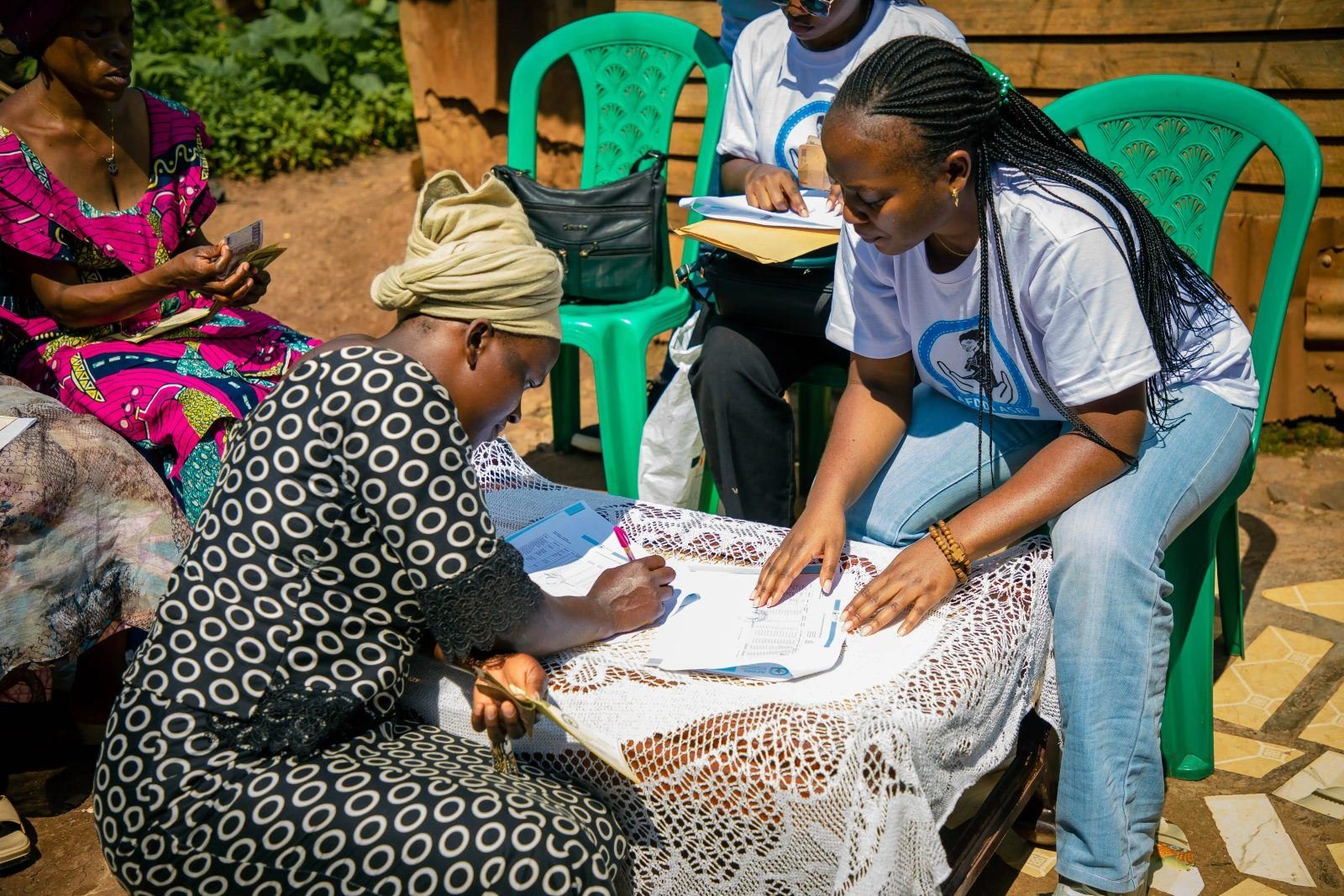
Families have the will to move forward, but their savings alone do not always provide enough security or capital.
A family fund can quickly become insufficient when several members need financing at the same time.
Cash kept without appropriate safeguards can be lost, stolen, misused or become a source of conflict.
When balances, decisions and repayments are incomplete, members can no longer verify what belongs to them.
The closure or disruption of financial institutions in Bukavu and parts of South Kivu, Democratic Republic of the Congo, leaves community groups with few reliable options.
The project combines community organisation, economic support, complementary resources and digital traceability.
Savings remain identified and separate from AFDDI’s operating money. Clear records and shared controls reduce loss and abuse.
AFDDI trains committees, clarifies responsibilities, supports meetings and helps families resolve conflicts.
Members prepare realistic projects. AFDDI helps assess needs, repayment capacity and the support required for success.
AFDDI seeks partners and revolving resources so that family savings can be complemented and benefit more members.
The project aims to turn collective discipline into lasting economic capacity.
Members can better understand and verify their individual savings and the resources held by their family.
Revolving funds can successively support several members instead of being consumed through a one-off intervention.
Documented decisions, reconciled balances and accessible information strengthen accountability within the group.
Families build permanent capital, stronger skills and the ability to manage more of their activities responsibly.
Financing is never automatic. It follows the reality of the member, the activity and available resources.
The member builds savings according to their capacity and takes part in family life.
The member explains the opportunity, the amount needed and how the financing could be repaid.
The family reviews the request and AFDDI helps assess its viability, risks and support needs.
Once properly formalised, the activity is followed and repayments replenish the designated fund for future members.
Families own their resources and decide how to use their own funds. AFDDI structures and supports the project, AKIBA makes operations verifiable, and licensed institutions carry regulated financial services when accessible.
AKIBA helps families and AFDDI follow savings, decisions, financing and repayments. It preserves the history of each authorised operation and supports reconciliations, controls and impact reporting.
Discover AKIBA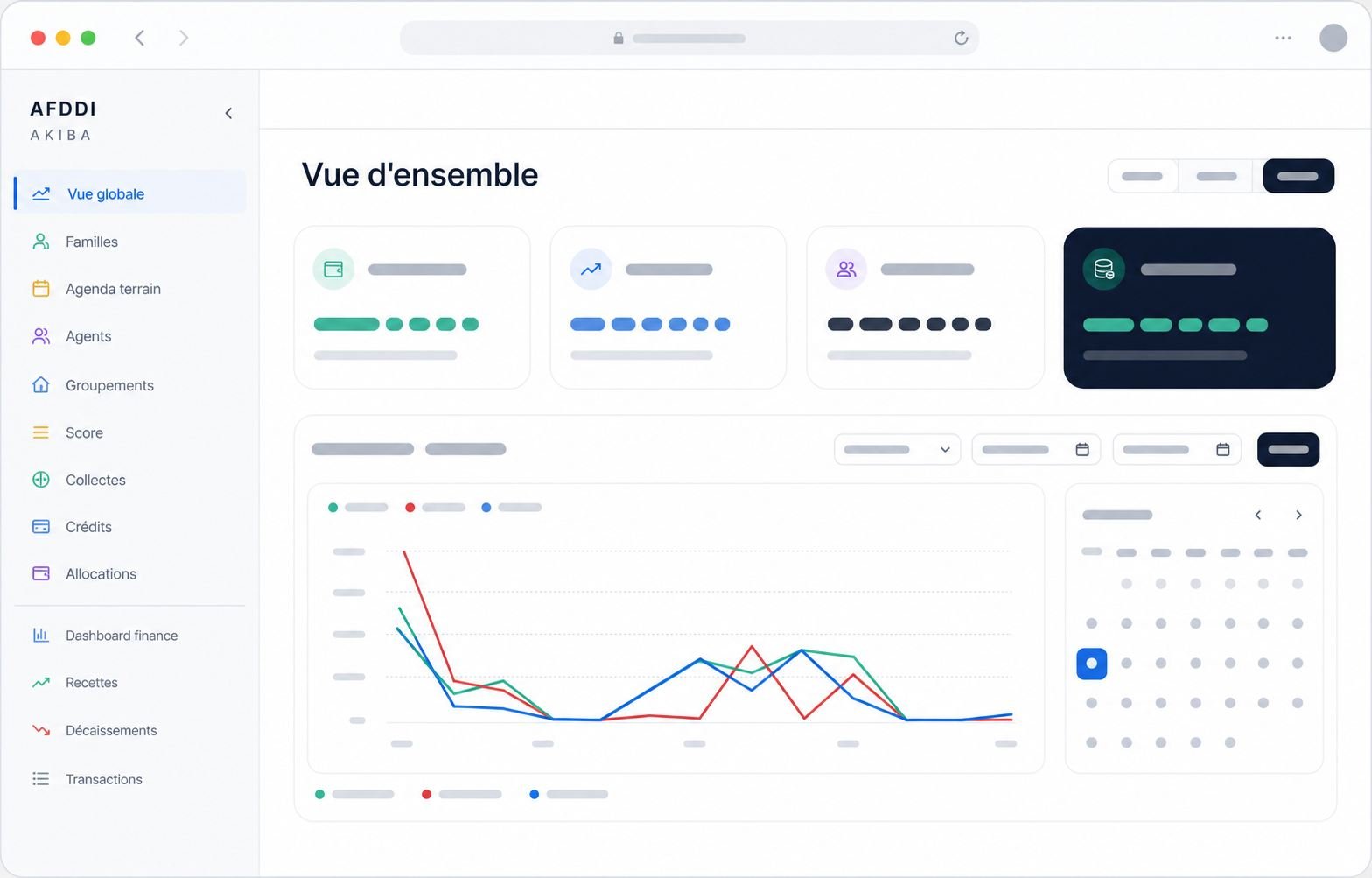
Only aggregated, verified and expressly approved results may be published on the public website.